Privacy Film vs Curtains: Which Is Better for Your Home?
Curtains give complete privacy when closed — but they also block daylight and your view. Privacy film protects an overlooked room by day while keeping the light.

Privacy film vs Curtains.
The best choice depends on whether you need daytime privacy, night-time cover, blackout, insulation or an uninterrupted outward view. This guide compares privacy film and curtains across the factors that matter most, so you can choose the right solution for each room.
How they compare.
The short answer: film or curtains?
Privacy film is usually the better choice when you want daytime privacy without closing off the window or darkening the room. Curtains are better when you need blackout, added softness, adjustable night-time cover or thermal insulation.
For many homes, the most practical solution is to use privacy film during the day and retain curtains or a blind for complete privacy after dark — particularly with one-way mirror film, which depends on the outside being brighter than the inside.
Which option gives the best privacy?
Curtains provide complete privacy in both directions when closed, day or night — but only when drawn, which removes daylight and the view. Frosted film provides consistent obscured privacy day and night without being adjusted, while one-way reflective film gives strong daytime privacy and keeps the outward view.
The right product depends on whether you need privacy only during the day, at all times, or with an outward view retained.
Privacy without losing natural light
The main advantage of privacy film over curtains is that it protects an overlooked room while the glass stays clear and bright. Frosted film diffuses soft daylight into the room; reflective film keeps the view out. Either way you avoid keeping curtains drawn through the day simply for privacy, which darkens the space and increases reliance on artificial light.
Frosted film or one-way film?
Frosted film obscures the view in both directions and works day and night, making it ideal for bathrooms, front doors, sidelights and overlooked lower windows. One-way reflective film gives daytime privacy while keeping an outward view, suiting living rooms and street-facing windows — but its effect reduces after dark when the interior is brighter than outside, so curtains or a blind are useful in the evening.
We explain both options at survey so the film matches how each room is used.
Which rooms benefit most?
Bathrooms and en-suites: frosted film for permanent privacy with daylight. Living rooms and street-facing windows: one-way film for daytime privacy with a view. Bedrooms: film for daytime privacy, kept with curtains or a blind for night-time blackout. Front doors, sidelights and ground-floor windows: frosted film for consistent privacy. Home offices: film to reduce overlooking and glare while keeping the room bright.
Is privacy film cheaper than curtains?
It depends on the window and the curtains. Basic curtains can be inexpensive, while made-to-measure curtains for large or awkward windows can cost considerably more. Privacy film is a one-off professional installation with no washing, replacement or cleaning costs over time, and carries manufacturer warranties on qualifying products. For large glazing, bay windows and patio doors film is often the more cost-effective long-term choice.
Can privacy film replace curtains completely?
Film can replace curtains where the goal is daytime privacy, reduced overlooking, glare control or protecting interiors from UV. Curtains or blinds are still recommended where you need full night-time blackout, thermal insulation or a soft decorative finish. Many homes use both — film on the glass for the day, curtains for the evening.
Recent installations
in Scotland.




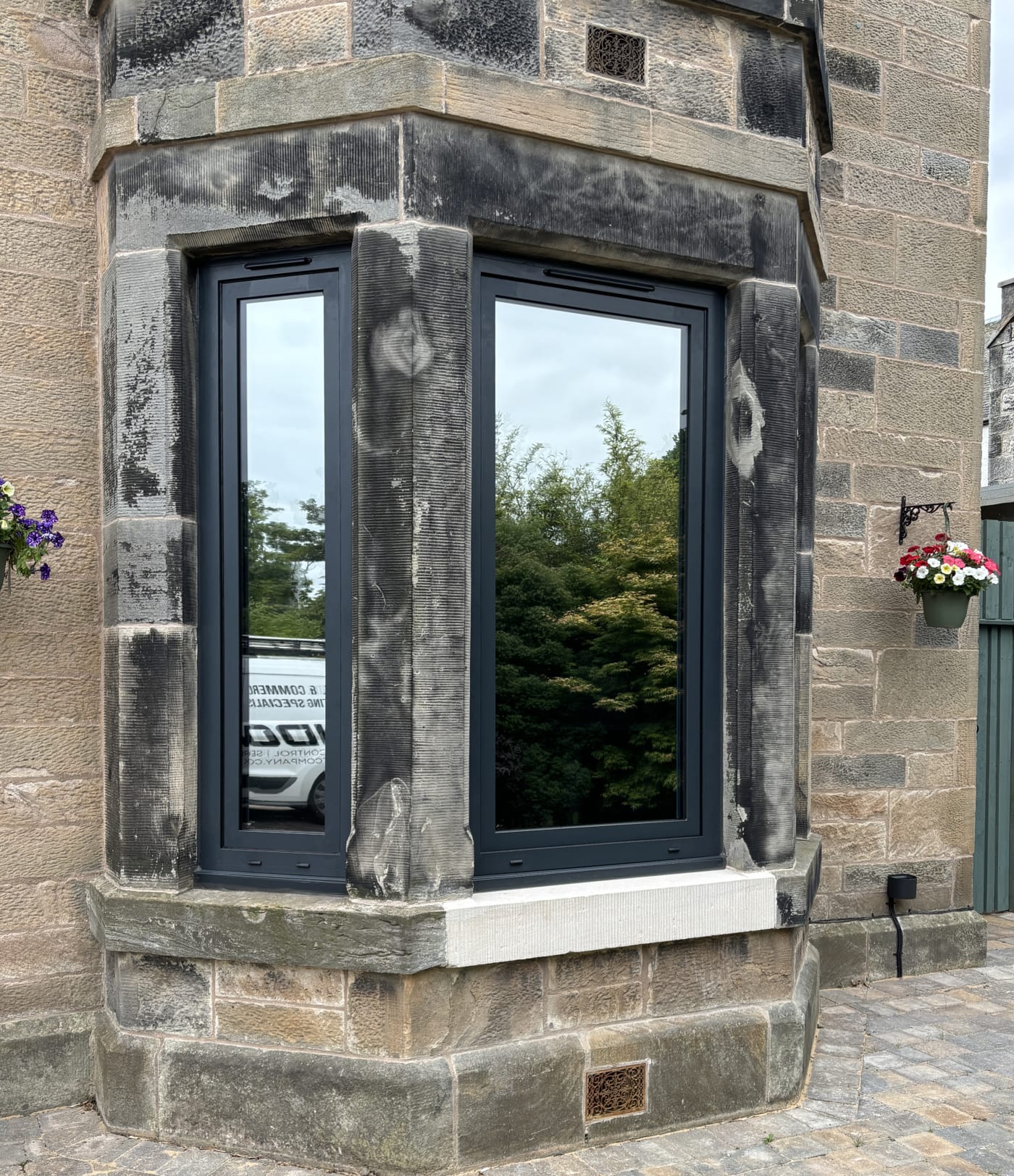
For daytime privacy that keeps your light — plus heat and UV control — privacy film wins, with nothing to draw and no maintenance. Curtains still win at night for blackout, warmth and soft styling. The ideal for many rooms is film for the day and curtains or a blind for the evening.
Common questions.
Can you see through privacy film at night?
Frosted film obscures the view day and night. One-way reflective film mainly works during the day and can lose its effect at night when the interior is brighter than outside — so curtains or a blind are useful after dark with reflective film.
Does privacy film make a room dark?
No. Frosted film diffuses soft daylight into the room and reflective film keeps the glass clear, so the room stays bright — unlike curtains drawn for daytime privacy, which darken the space.
Can privacy film be fitted to only half a window?
Yes. Privacy film can be applied as a band across the lower part of a window, or to specific panes, so you gain privacy where it's needed while keeping the clear view and light above.
Is privacy film suitable for double glazing?
Yes, in most cases. Privacy film can be installed on double-glazed units after a compatibility check of the glass at survey.
Do I still need curtains if I have privacy film?
Often you'll keep curtains or a blind for the evening — for blackout, warmth and style — but you won't need to draw them through the day, because the film handles daytime privacy while keeping your light.
Which is better for a bathroom?
Frosted privacy film — it gives full day-and-night privacy while keeping the room bright, and unlike curtains it copes well with moisture.
How long does privacy film last?
Professionally installed privacy film is long-lasting, with manufacturer warranties available on qualifying products. Service life depends on the film, glazing and how it's cared for.
Related options.
Still deciding?
Free quote.
Site survey and honest advice on whether film is right for your windows. Most quotes returned within 24 hours.