Window Film vs Replacement Glass: Which Is Better?
This comparison looks specifically at replacing the glass units within otherwise serviceable window frames.

Window Film vs Replacement glass.
If your existing windows are structurally sound but your rooms suffer from excessive heat, glare, fading or poor privacy, replacing the glass may not be necessary. Professionally installed window film can upgrade the glass you already have — often with less disruption and at a considerably lower cost. Window film improves the performance of serviceable glass; it does not repair failed glazing units or damaged frames.
How they compare.
Window film or replacement glass: the short answer
Window film is normally the better-value option when the existing windows and sealed units are in good condition and the objective is to reduce solar heat, glare or UV exposure, or improve privacy.
Replacement glass is the correct choice when a sealed unit has failed, glass is damaged, condensation is trapped between the panes, or a different structural or thermal glazing specification is required. Window film improves the performance of serviceable glass; it does not repair failed glazing units or damaged frames.
If your frames themselves are damaged, draughty or deteriorating, our window film vs new windows guide is the more relevant comparison.
When window film is the better option
Window film is designed as a retrofit upgrade, so it is particularly suitable when the existing windows are in good condition but their solar, privacy or UV performance is inadequate. It may be the better option when south- or west-facing rooms become uncomfortable in direct sunlight, when glare makes televisions, monitors or workspaces difficult to use, when furniture, flooring, artwork or merchandise needs protection from UV exposure, or when daytime privacy is required without replacing the glass.
Performance depends on the selected film, glass type, window orientation and installation position — we assess the existing glazing before recommending a compatible product.
When replacement glass is the correct choice
Replacing the sealed unit is the right route when the glazing itself has failed or needs to change: a blown or misted double-glazed unit with trapped condensation, cracked or damaged glass, or a requirement for a different thermal or safety glazing specification that the current glass cannot meet.
In these cases film cannot substitute for new glass, because it upgrades the performance of sound glazing rather than repairing a failed unit.
Can window film really reduce the cost?
For an existing building, window film typically costs a fraction of replacing the glass units. It avoids new sealed units, reglazing labour, access equipment and the disposal of old glass, and most installations are completed in a single day from inside the property.
Where the goal is comfort — less heat, glare or fading — rather than repairing broken glazing, film usually delivers comparable everyday performance to solar-control glass at much lower cost and disruption.
Which option do I need?
Choose window film if your windows and sealed units are sound and you want to reduce heat, glare, UV or improve daytime privacy affordably and quickly. Choose replacement glass if a unit has failed or misted, the glass is damaged, or you need a different structural or thermal specification. Ask us for an assessment if you're not sure whether your glazing is serviceable — we inspect the glass and advise honestly on the better route.
Recent installations
in Scotland.

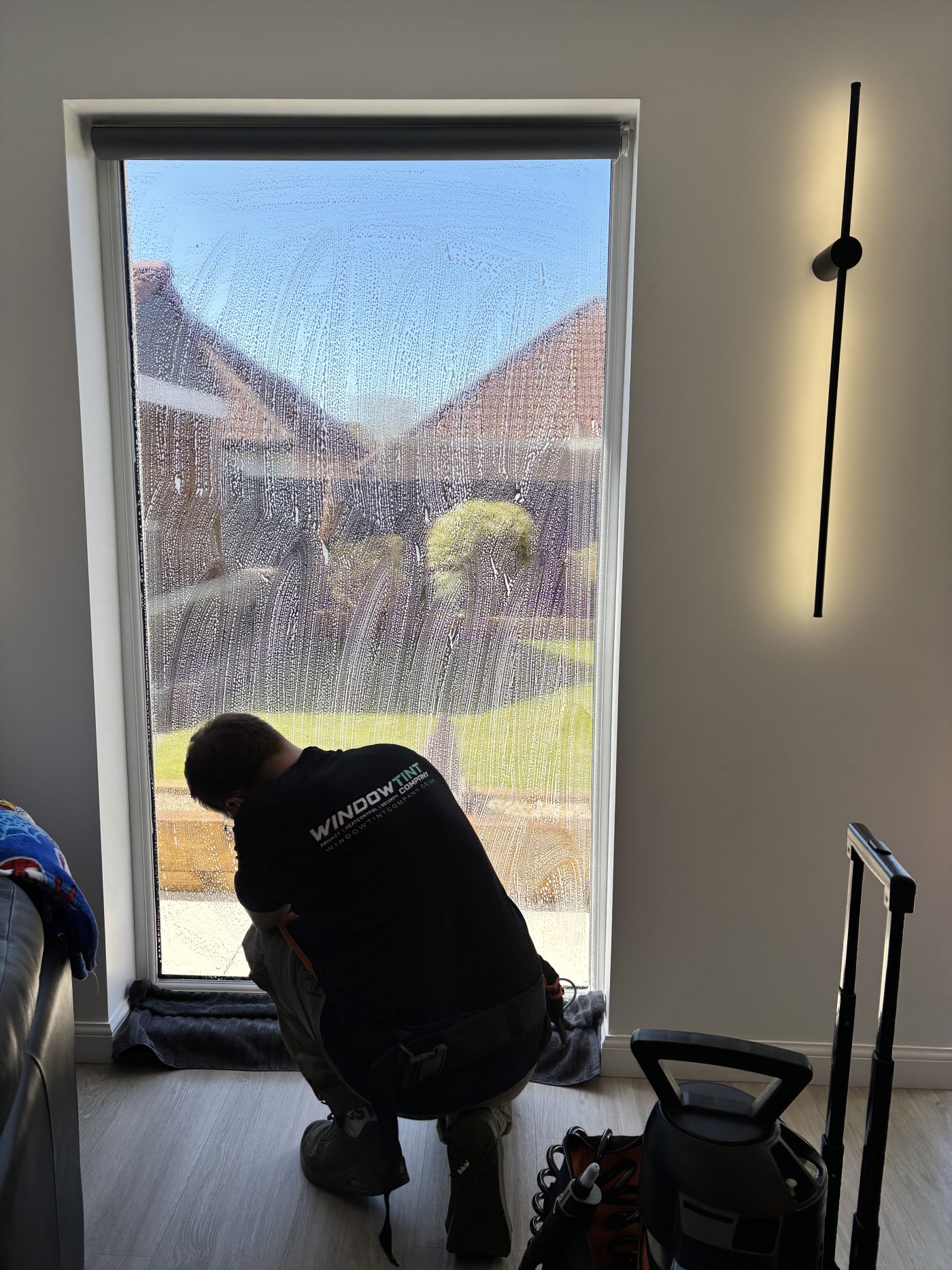
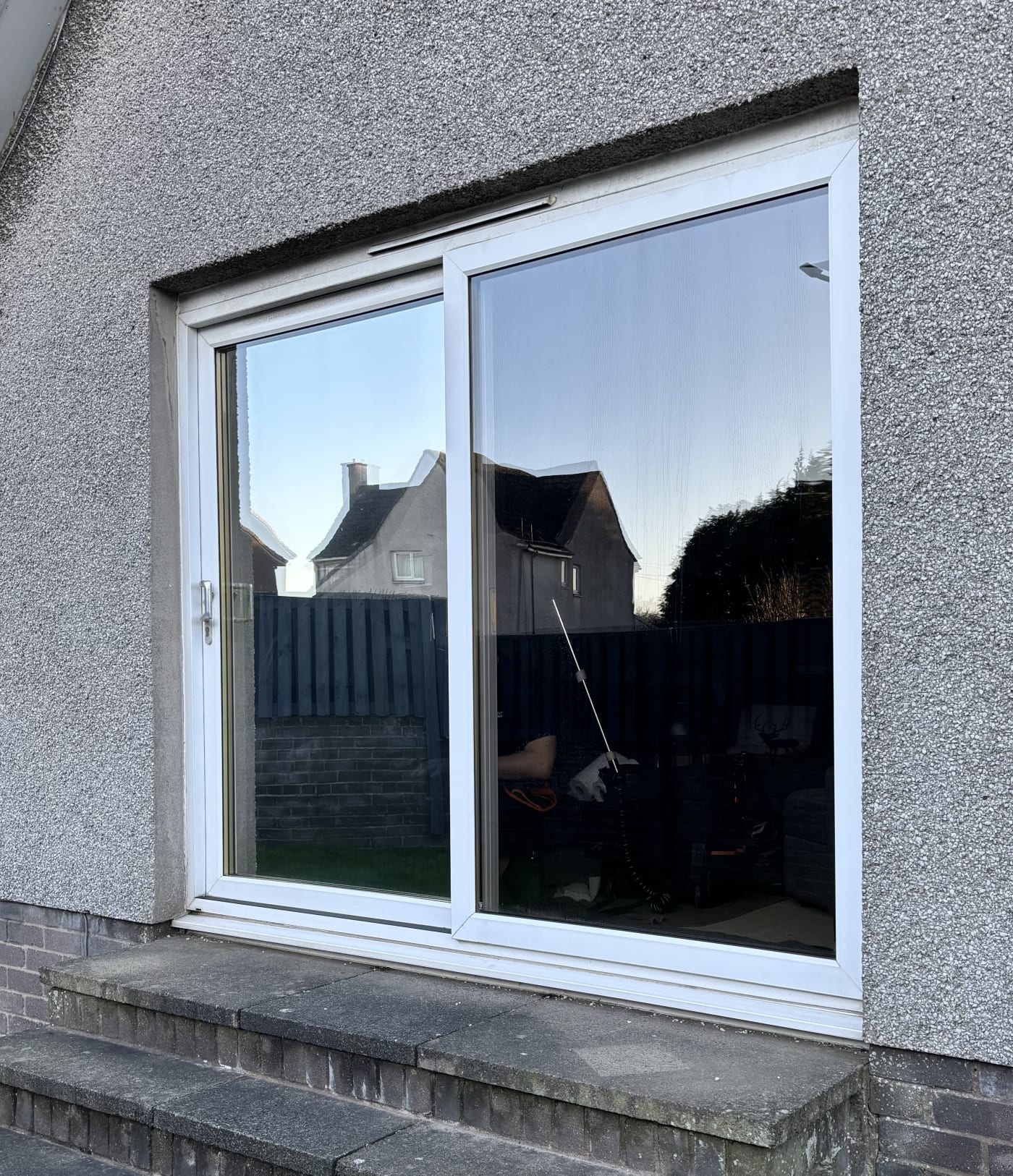

For an existing building with sound glazing, window film is the smart-value choice — comparable everyday heat and UV performance to solar glass, in a day, for a fraction of the cost and disruption. Replacing the glass is the right call when a unit has failed, the glass is damaged, or a different glazing specification is genuinely required.
Common questions.
Does window film perform as well as solar-control glass?
For the everyday problems — heat, glare and fading — high-performance film delivers comparable results, rejecting up to 79% of solar heat and blocking up to 99% of UV, depending on the film and glazing. It does not, however, replace a failed sealed unit.
Is window film really cheaper than replacing the glass?
For serviceable glazing, yes — you avoid new units, reglazing labour, access and disposal, and it's typically completed in a day. It is not a substitute where the glass itself needs replacing.
Can window film fix a misted or blown double-glazed unit?
No. Condensation trapped between the panes means the sealed unit has failed and needs replacing. Film upgrades the performance of sound glazing; it cannot repair a failed unit.
Will window film damage my existing glass?
When the correct film is specified for your glazing, professionally installed film should not damage the glass and can generally be removed cleanly later. Compatibility is checked at survey.
Does window film help with heat as much as new solar glass?
For reducing solar heat gain on existing glazing, high-performance solar film provides a large share of the benefit of solar-control glass, without the cost of reglazing. The exact result depends on the film, glass and orientation.
My frames are old — should I still consider film?
If the frames themselves are draughty or deteriorating, replacing the whole window may be more appropriate — see our window film vs new windows comparison. If the frames are sound but the glass performance is poor, film is often ideal.
Related options.
Still deciding?
Free quote.
Site survey and honest advice on whether film is right for your windows. Most quotes returned within 24 hours.