Window Film vs Shutters: Which Is Better for Your Home?
Plantation shutters and window film can both improve privacy and comfort — but they solve different problems.
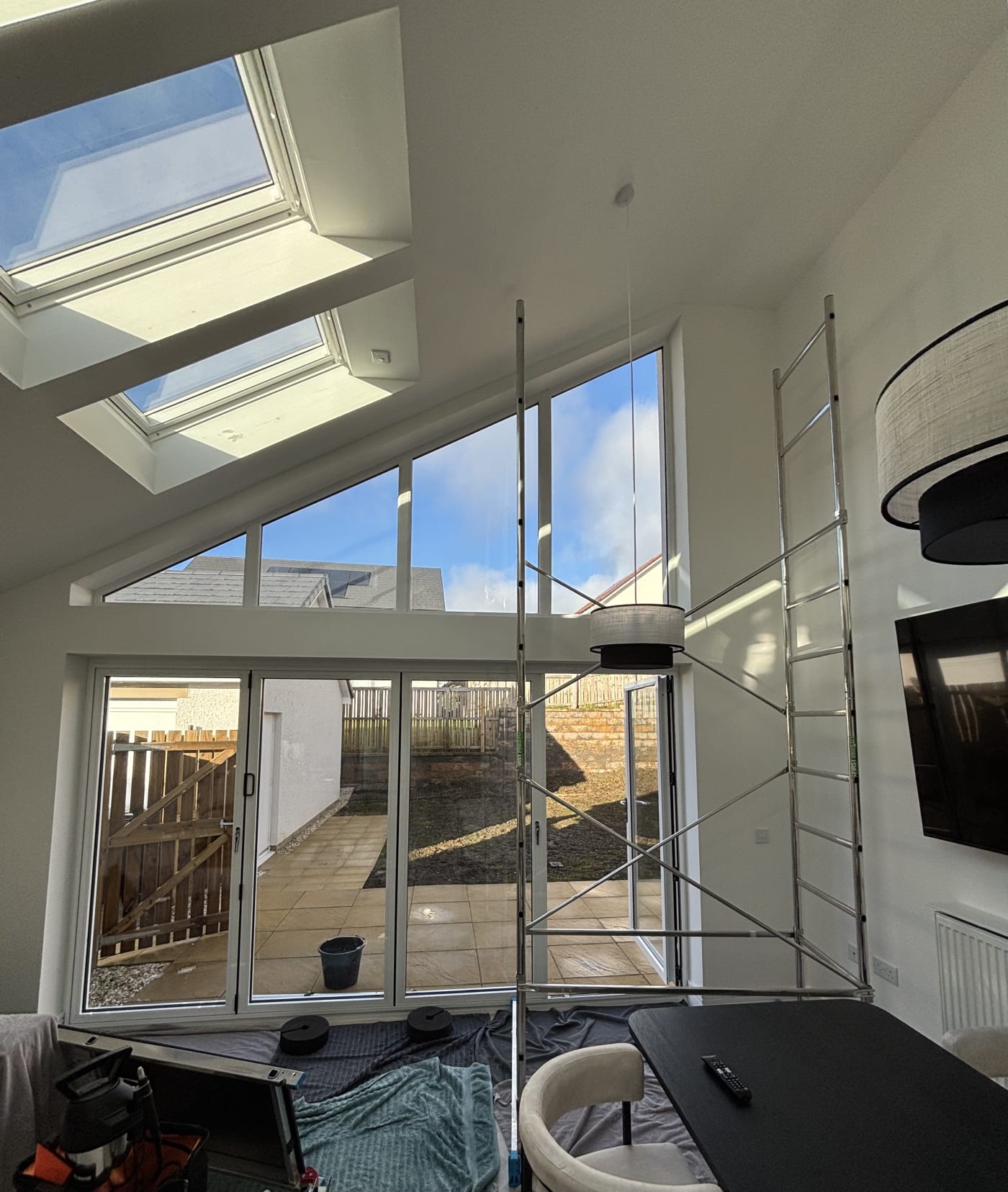
Window Film vs Shutters.
Plantation shutters provide adjustable light control and a distinctive interior feature, while window film works directly on the glass to reduce solar heat, glare and damaging UV without covering the window. This guide compares them for cost, privacy, heat reduction, natural light, appearance and maintenance so you can choose the right solution for your home.
How they compare.
The short answer: film or shutters?
Choose window film when your main priorities are reducing excessive heat and glare, protecting furnishings from UV exposure and retaining your outward view. Choose plantation shutters when adjustable light control, night-time privacy and their decorative appearance matter most.
In some rooms the best solution is to combine both — solar control film for continuous protection at the glass, and shutters for adjustable privacy and room-darkening when required.
Which option reduces heat more effectively?
Solar control window film works at the glass and can reject up to 79% of solar heat, depending on the film and glazing, so it reduces heat before it enters the room. Shutters sit inside the room, so much of the sun's energy has already passed through the glass — they help most only when fully closed, which also darkens the space.
For conservatories, south- and west-facing rooms and large glazed areas, film is usually the more effective heat solution.
Which is better for privacy?
Shutters provide excellent adjustable privacy day and night, but closing them removes the view and reduces daylight. Reflective privacy film gives strong daytime privacy while keeping the outward view; frosted film gives day-and-night privacy with soft diffused light.
Reflective one-way film depends on it being brighter outside than inside, so at night, with internal lights on, shutters or blinds may still be preferred where full privacy is essential.
Which keeps more natural light?
Window film keeps the glass clear, so the room stays bright while heat, glare and UV are controlled. Shutters, once partly or fully closed for shade or privacy, noticeably reduce natural light and can increase reliance on artificial lighting. If retaining daylight matters, film has the advantage.
Cost, installation and maintenance
Plantation shutters are a premium, made-to-measure product and are often the most expensive window treatment, fitted to the frame over a longer lead time. Window film is a fraction of the cost, applied to the existing glass in a single day with no frame fitting.
Film also has very low maintenance — no slats, cords or moving parts — with manufacturer warranties up to ten years on qualifying products. Shutters are durable but a significant investment.
When shutters are the better choice
Shutters are the stronger choice where their look is a key part of the interior, where adjustable light control is wanted through the day, and where night-time privacy or partial blackout matters. They add a distinctive, permanent feature to a room.
When window film is the better choice
Window film is the better choice for reducing solar heat and glare, protecting interiors from UV fading, keeping the outward view and daylight, treating large or awkward glazing affordably, and adding discreet daytime privacy without a visible change to the window.
Can you use window film and shutters together?
Yes. Solar control or UV film can stay on the glass to provide continuous heat, glare and fade protection, while shutters provide adjustable privacy and room-darkening when needed. This combination suits south-facing rooms where you want both comfort during the day and privacy or shade on demand.
Recent installations
in Scotland.
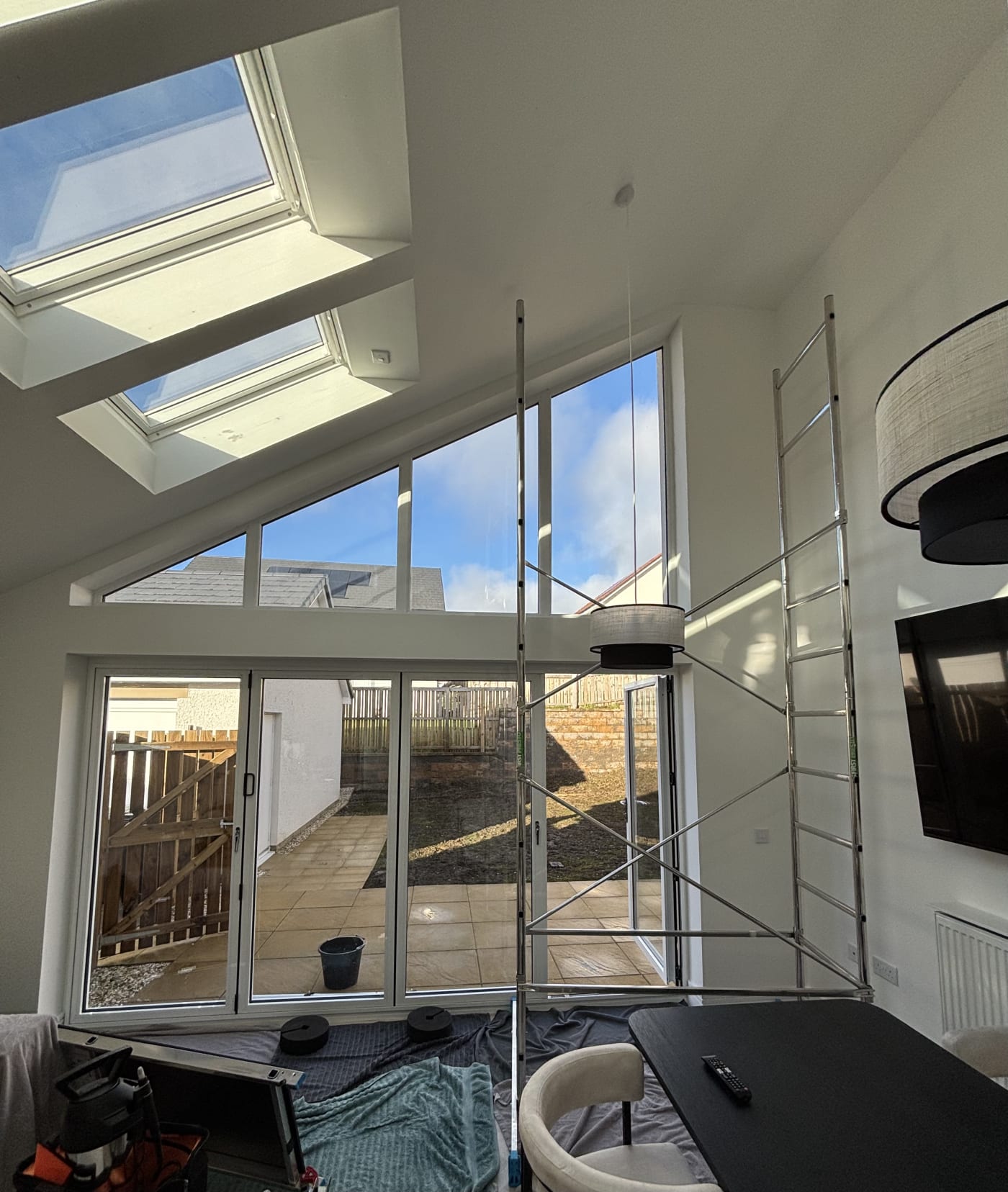
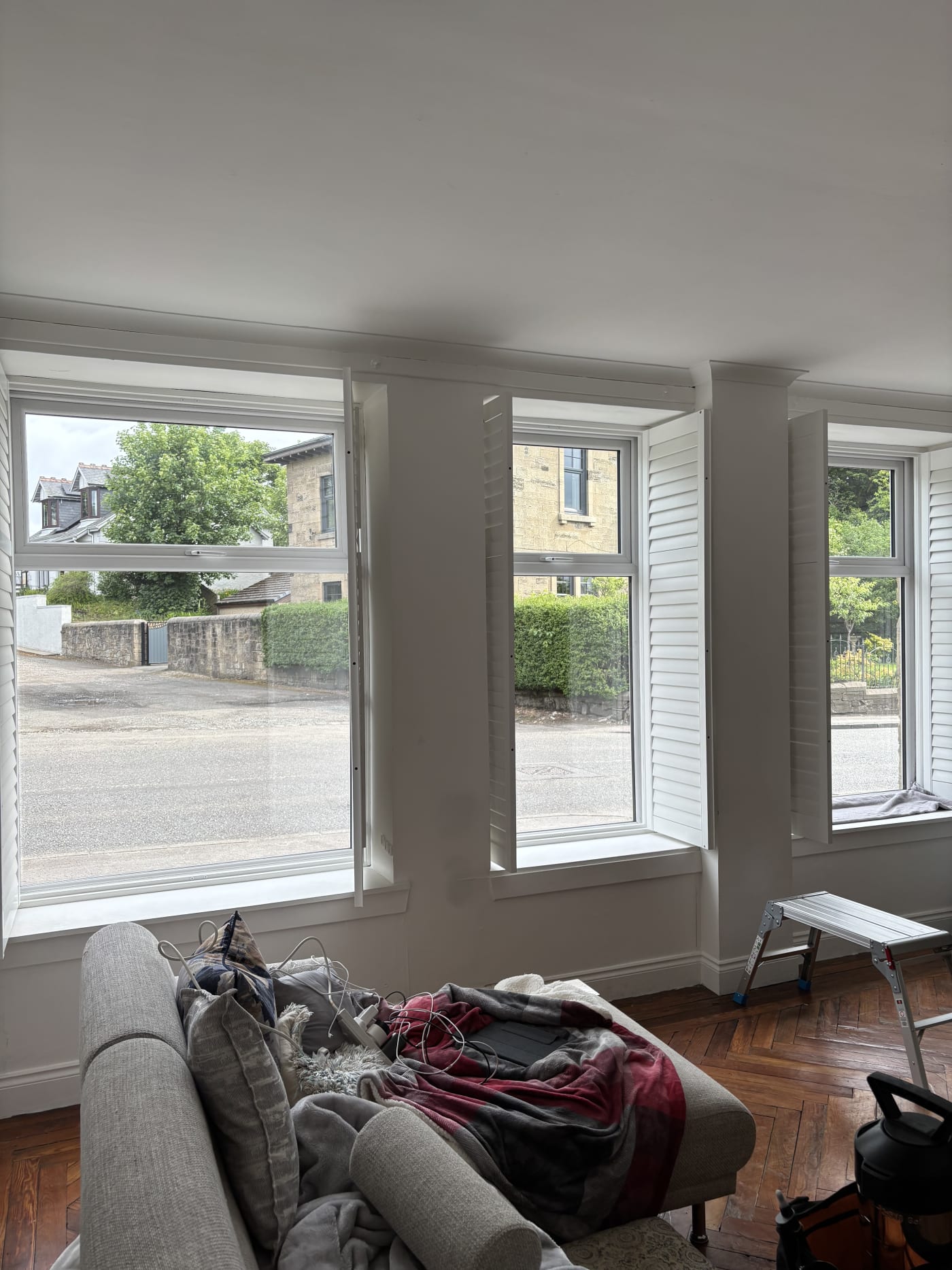
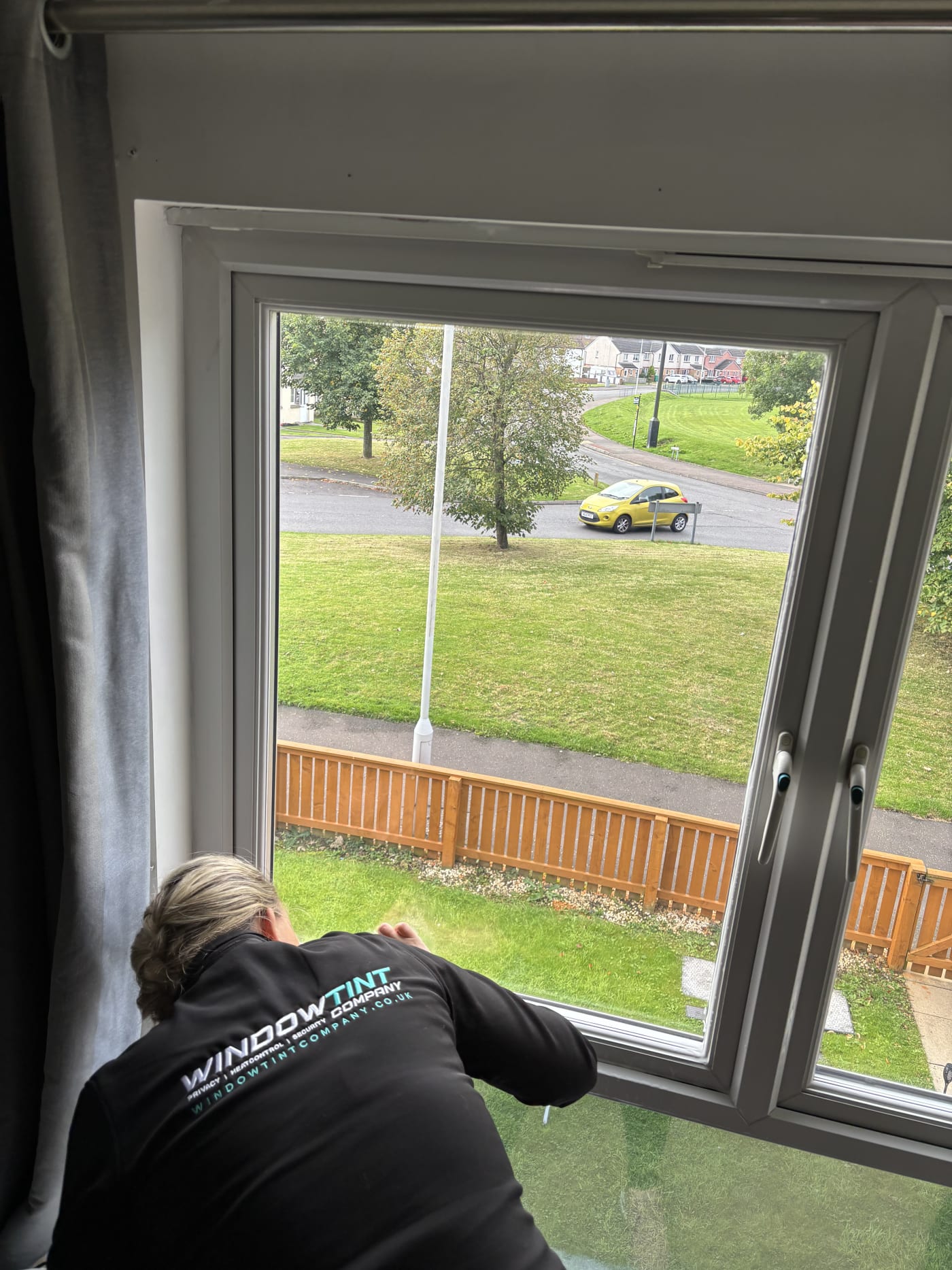

For heat, glare, UV and value, window film wins comfortably and keeps your view. Shutters win on looks, adjustable light control and night-time privacy, at a much higher price. Many homeowners use film for everyday comfort and add shutters only where the decorative look or adjustable privacy is the priority.
Common questions.
Is window film cheaper than plantation shutters?
Usually, yes. Made-to-measure plantation shutters are a premium product, while professionally installed window film is typically a fraction of the cost and fitted in a single day. Exact prices depend on the window sizes and the film or shutter specification.
Does privacy window film work at night?
Frosted film provides privacy during the day and at night. Reflective one-way film mainly provides daytime privacy and may lose its effect when it is dark outside and the interior is brightly lit — shutters or blinds can cover night-time privacy.
Do shutters reduce heat from the sun?
Only marginally, and mainly when fully closed, because the solar energy has already passed through the glass. Solar control film rejects a large share of that heat at the glass while the room stays bright.
Does window film make a room dark?
Not necessarily. Films come in several shades and light-transmission levels. A lighter neutral film reduces heat and UV while keeping more daylight; a darker or reflective film gives stronger glare control and privacy.
Can window film be fitted to double glazing?
Many films can be used on double-glazed units, but the correct product must be selected for the glazing type. A professional survey confirms compatibility before installation.
Can window film damage glass?
When the correct film is specified for the glazing, professionally installed film should not damage the glass. Compatibility is checked at survey to avoid issues such as thermal stress on unsuitable panes.
Is window film suitable for bay windows and large patio doors?
Yes — film is well suited to bay windows, large patio and bi-fold doors and other big glazed areas, where shutters can be expensive or intrusive.
How long does residential window film last?
Lifespan depends on the film, glazing, orientation and exposure. Quality architectural films can carry manufacturer warranties of up to ten years, with some installations lasting longer.
Related options.
Still deciding?
Free quote.
Site survey and honest advice on whether film is right for your windows. Most quotes returned within 24 hours.