Conservatory Window Film Installation Across Scotland.
Professional conservatory window film for glass roofs and side glazing, specified to reduce solar heat, control glare and block UV without replacing the existing glass.
Window Tint Company surveys and installs conservatory solar film throughout Edinburgh, Glasgow, Dunfermline, Fife and across Scotland. We assess the glazing, roof construction, orientation and access before recommending a film with the right balance of heat rejection, daylight and appearance.
Why conservatories overheat.
A conservatory contains far more glazing than a normal room. Roof panels and sun-facing windows admit solar energy throughout the day, so the space can become uncomfortable even when the outdoor temperature is moderate. The same exposure can create harsh glare and accelerate fading of furniture, flooring and fabrics.
Solar-control window film is applied directly to compatible glass to reduce the amount of solar energy entering the room. It begins working whenever sunlight reaches the glazing and requires no cords, motors or daily adjustment. The result depends on the selected film, glass type, roof orientation, ventilation and the total area treated.
Film is not a substitute for ventilation, insulation or air conditioning, and it does not guarantee a fixed room-temperature reduction. Its purpose is to reduce solar gain and glare so the conservatory is more comfortable and easier to use during bright weather.
Benefits of conservatory
window film.
Conservatory Heat-Reduction Film
Selected solar-control films can reject up to 79% of total solar energy, depending on the product and glazing. Roof glazing is often the priority because it receives direct overhead sunlight, while south- and west-facing side panels may also benefit from treatment.
We explain the film's total solar-energy rejection, visible-light transmission and external appearance before installation. Stronger solar performance can create a more reflective or tinted finish, so the correct choice is a balance rather than simply selecting the darkest film. See our heat-reduction window film.
Glare Reduction for Conservatories
Anti-glare solar film reduces intense sunlight on televisions, laptops, dining tables and seating areas. It can make a conservatory more practical as a living room, dining room or occasional home workspace.
Glare reduction involves controlling a proportion of visible light. We show film samples and explain the expected light level so the finished room remains bright enough for the way it is used.
UV Protection and Fade Reduction
Selected professional window films can block up to 99% of ultraviolet radiation, helping reduce UV-related fading of upholstery, rugs, timber flooring, curtains, artwork and other interiors.
UV is only one contributor to fading, alongside visible light, heat, humidity and material sensitivity. Window film cannot completely prevent colour change, but it can reduce a significant part of the exposure.
Daytime Privacy for Conservatories
Where a conservatory is overlooked, reflective solar film can combine heat control with daytime privacy while retaining an outward view. The effect depends on the outside being brighter than the inside and can reduce or reverse after dark when internal lights are switched on.
For privacy during both day and night, frosted or opaque film is more consistent, although it obscures the view through the treated glass. We explain these differences before recommending a privacy option. See our privacy window film.
Conservatory roof film
and side-glazing film.
A conservatory roof and its vertical windows do not always need the same product. The roof receives overhead solar exposure and may require a different film or installation position from the side glazing. South- and west-facing elevations usually experience the strongest afternoon heat and glare, while shaded panes may require a lighter film or no solar treatment at all.
During the survey, we assess each elevation rather than automatically applying one film to every pane. This avoids unnecessary darkening and allows the specification to concentrate performance where it will make the greatest difference. Where a property has a separate roof lantern, skylight or garden room, we treat those as distinct glazed structures.
Glass roofs, polycarbonate
roofs and compatibility.
Most architectural window films are designed for glass. Some specialist products may be suitable for particular polycarbonate or plastic roof systems, but suitability must be confirmed before installation. Not every conservatory film can be fitted to every roof material.
For glass conservatories, the film must be matched to the pane construction, coatings, thickness, orientation and condition. Double glazing, laminated glass, toughened glass, Low-E coatings and self-cleaning glass can require different products or installation positions. Excessive film absorption on an unsuitable pane can increase thermal stress, which is why compatibility is checked during the survey.
If the existing glazing remains under warranty, the owner should confirm the position with the glazing supplier where necessary. We provide the available film data and warranty information for the proposed product.
Which conservatory window
film is right for you?
Maximum summer heat control
A higher-performance reflective solar film may be appropriate for heavily glazed, south-facing conservatories where overheating is the main problem. It will normally create a more noticeable external finish and reduce more visible light than a lighter film.
Heat reduction with a subtler appearance
A neutral or lighter solar-control film may suit homeowners who want improved comfort while keeping the glazing appearance closer to its existing look. The trade-off is usually lower solar and glare rejection than a stronger reflective product.
Heat control plus daytime privacy
A reflective privacy film can address both problems under suitable daylight conditions. Night-time privacy requires blinds, curtains or a different opaque or frosted treatment.
UV protection with minimal visual change
A clear or near-clear UV-control film may be suitable where fading is the priority and major heat or glare reduction is not required.
We bring relevant samples to the survey so you can compare tint, reflectivity, outward visibility and natural-light transmission before selecting a film.
Conservatory and orangery
types we treat.
Victorian and Edwardian conservatories
Solar film for pitched roofs, multiple facets and sun-facing side glazing.
Lean-to conservatories
Heat and glare reduction for simple sloping roofs and large glazed elevations.
Gable-front conservatories
Specification for high-level gable glass, roof panels and vertical glazing.
Orangeries and glazed extensions
Solar control for roof sections, lanterns and large windows while retaining the room's open character.
Conservatories used as dining or living rooms
Film selected to balance comfort, glare reduction and daylight.
Conservatories used as occasional home offices
Solar and anti-glare film to improve screen visibility during bright weather.
Our conservatory survey
and installation process.
Initial information
Send photographs of the conservatory, approximate dimensions and details of the main problem. We ask whether the roof is glass or polycarbonate and about any known coatings or warranties.
Site survey
We measure the panes and assess orientation, glazing construction, access, visible-light requirements and the areas causing the most heat or glare.
Film recommendation
We explain suitable options, technical performance, appearance, limitations, expected warranty and whether the film should be installed internally or externally.
Written quotation
The quotation identifies the panes to be treated, film specification, access requirements and anticipated installation time.
Professional installation
Floors, furniture and surrounding surfaces are protected before the glass is prepared and the film is installed, finished and inspected.
Aftercare
We explain curing, cleaning and maintenance and provide the applicable warranty information for the selected film.
How much does conservatory
window film cost?
The cost depends on the total glass area, number and shape of panes, selected film, roof material, internal or external installation and the access equipment required. Conservatory roofs with steep pitches, high ridges or restricted working space generally require more installation time than easily reached side glazing.
Photographs and approximate dimensions can help us provide initial guidance, but the final specification and quotation may require a site survey. The quotation states whether it covers the roof, side glazing or both. Film usually avoids the structural work and disruption involved in reglazing.
Recent conservatory installations
in Scotland.
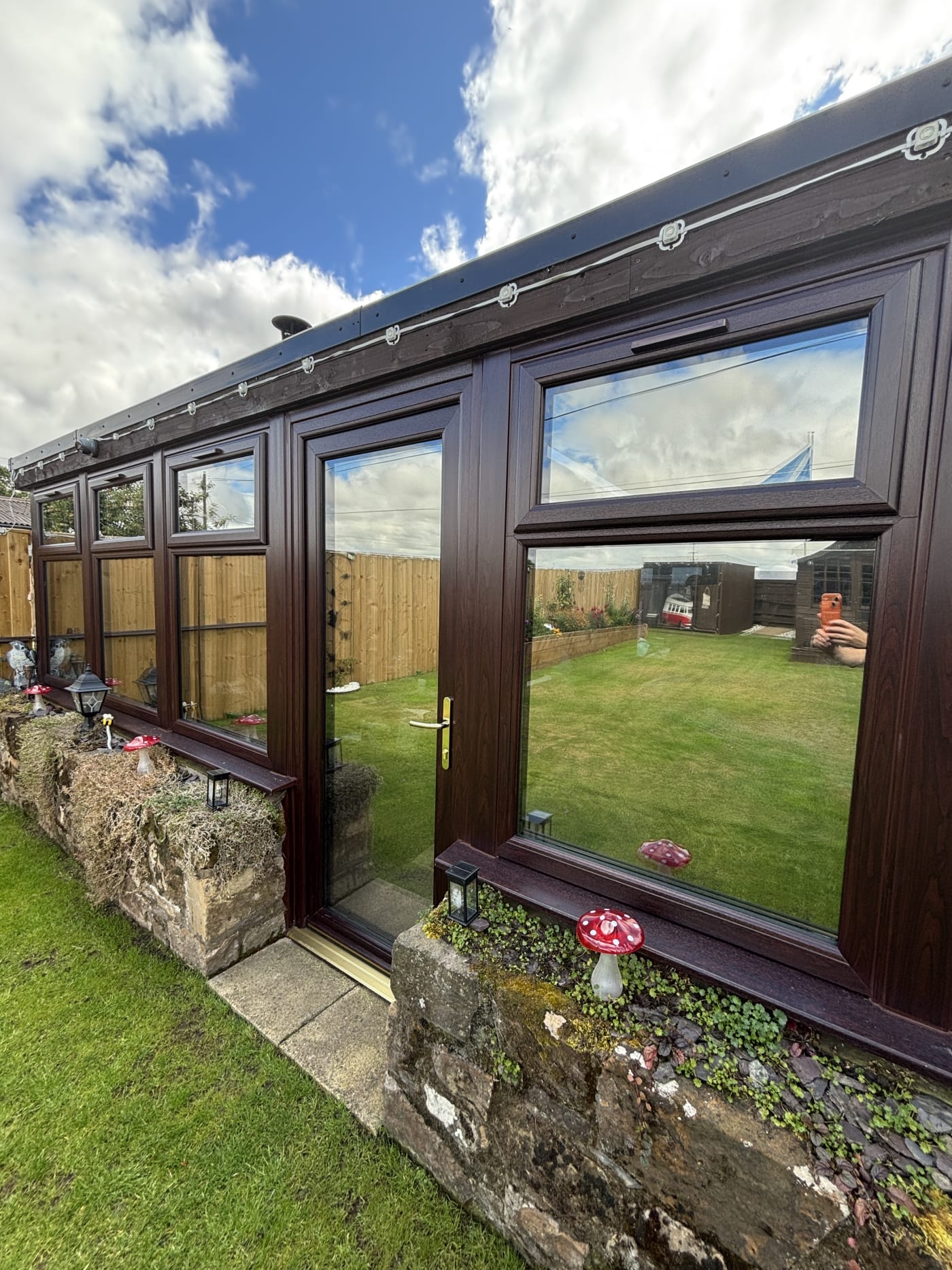
Conservatory heat & glare
Solar-control film across sun-facing conservatory side glazing to cut afternoon heat and glare while keeping the outward garden view.
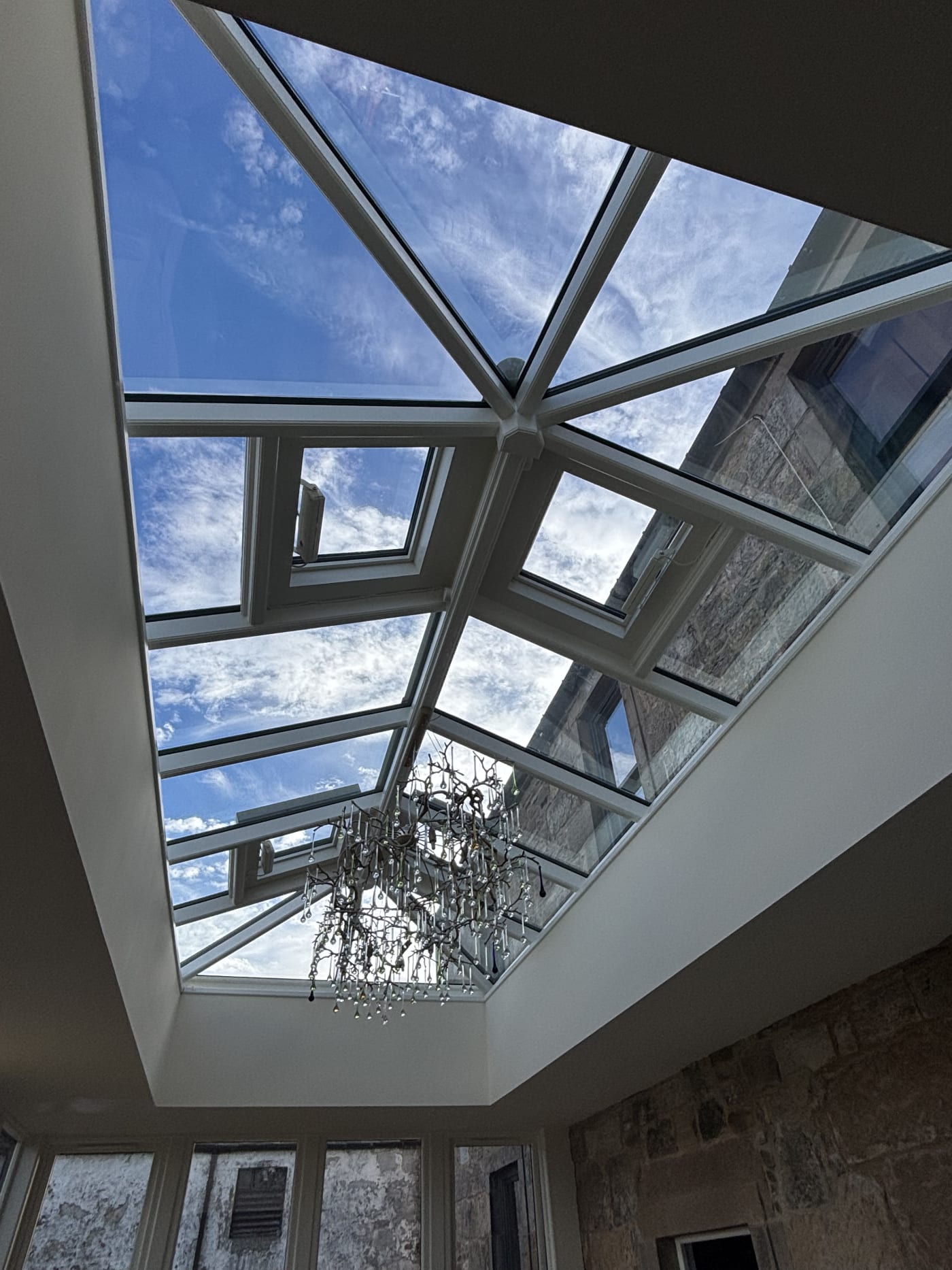
Glass-roof solar control
Roof-glazing solar film where direct overhead sun made the room uncomfortable — balancing heat rejection with retained daylight.
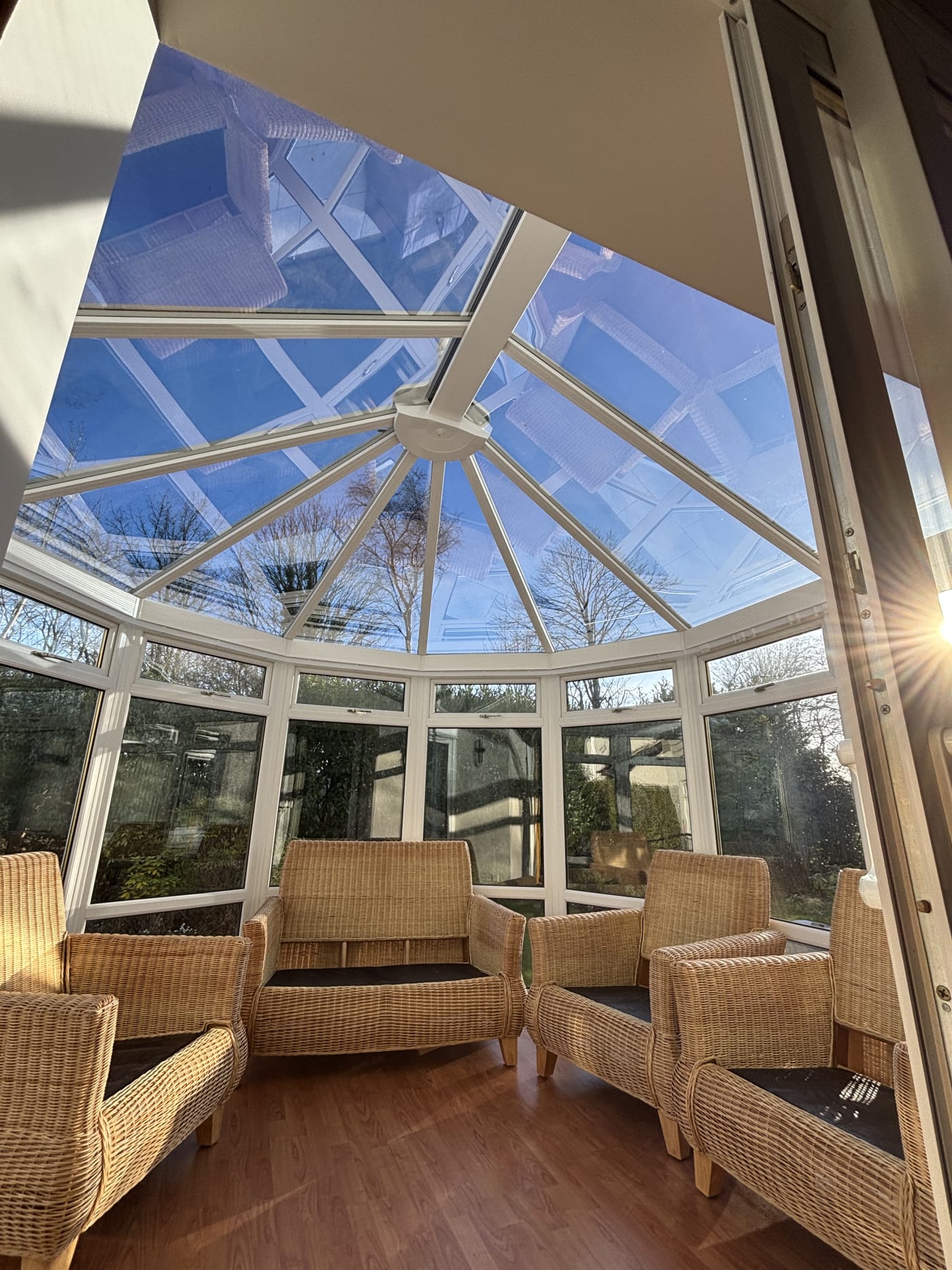
Orangery solar & UV
Solar and UV film on a glazed extension to reduce glare and help protect furnishings from fading, keeping the room's open character.
Why homeowners choose
Window Tint Company.
We specialise in architectural window film for buildings rather than vehicle tinting. Every conservatory project is assessed around the glazing, roof construction, orientation, access and the way the homeowner uses the room. Our recommendations explain what the film is expected to achieve, how it will look and where its limitations lie.
- Scotland-based architectural window film specialists.
- Glass compatibility checked before specification.
- Roof and side glazing assessed separately.
- Film samples available during the survey.
- Internal and external-grade options where appropriate.
- Careful protection of floors, furniture and frames.
- Manufacturer-backed warranties on qualifying products.
Conservatory window
film FAQs.
Does conservatory window film really reduce heat?
Solar-control film reduces the solar energy passing through compatible glazing. The improvement depends on the film, glass, roof orientation, treated area, ventilation and weather. It should not be sold as a guaranteed fixed temperature reduction.
Will the film make my conservatory dark?
Every solar film changes visible-light transmission to some degree. Lighter and neutral films retain more daylight, while darker or more reflective products usually provide stronger heat and glare control. We show samples before installation.
Should I film the roof, side windows or both?
The roof is often the highest-priority area because it receives direct overhead sunlight, but sun-facing side glazing can also contribute substantially. We survey each elevation and recommend treatment only where it is useful.
Can film be fitted to double-glazed conservatory glass?
Many films can be installed on double glazing, but the product must be compatible with the pane construction, coatings and condition. We check the glass before specifying a film.
Can film be fitted to Low-E or self-cleaning glass?
Sometimes, but product choice and installation position matter. The coating location and glazing manufacturer's requirements must be considered. We assess this during the survey and provide available compatibility information.
Can window film be fitted to a polycarbonate conservatory roof?
Some specialist products may be suitable for particular polycarbonate systems, but standard glass film should not automatically be used on plastic roofing. We confirm the roof material and recommend an appropriate option or explain when film is unsuitable.
Does conservatory film help in winter?
Standard solar-control film is primarily selected to reduce summer solar gain and glare. Certain Low-E films can improve radiant heat retention, but performance is product-specific and film will not turn a poorly insulated conservatory into a fully insulated room.
Will film affect conservatory plants?
Solar and glare-control films reduce parts of the light spectrum and total light reaching the room. Many plants tolerate this, but light-sensitive or specialist plants may respond differently. Tell us how the conservatory is used so we can discuss a suitable light level.
Does window film stop condensation?
No. Condensation is mainly related to surface temperature, humidity and ventilation. Film may alter glass-surface behaviour, but it should not be sold as a condensation cure.
Is conservatory window film better than blinds?
Film and blinds serve different purposes. Film works continuously at the glass to reduce solar gain, glare and UV while retaining an outward view. Blinds provide adjustable shading and can offer night-time privacy or blackout. Some rooms benefit from both.
Do you need scaffolding to fit roof film?
Access depends on the conservatory height, pitch and internal layout. Some roofs can be treated safely from inside using suitable access equipment; others may require tower access, a mobile platform or external installation. The method is confirmed after the survey.
How long does installation take?
Many domestic conservatories can be completed within one day, but large roofs, complex pane shapes, external film or specialist access may require longer. The expected duration is included in the quotation.
How long does conservatory window film last?
Service life depends on the product, installation position, orientation, exposure and maintenance. Manufacturer-backed warranties are available on qualifying products; the applicable term is stated in the quotation.
Can the film be removed later?
Most architectural films can be professionally removed from suitable glass. Removal time and adhesive cleaning depend on the product and installation age.
Related services
& areas.
Conservatory window film
across Scotland.
Based in Dunfermline, we work across Fife, Edinburgh, Glasgow, Stirling, Falkirk, Perth, Dundee, Aberdeen, Ayrshire and Lanarkshire, with wider coverage depending on the project.